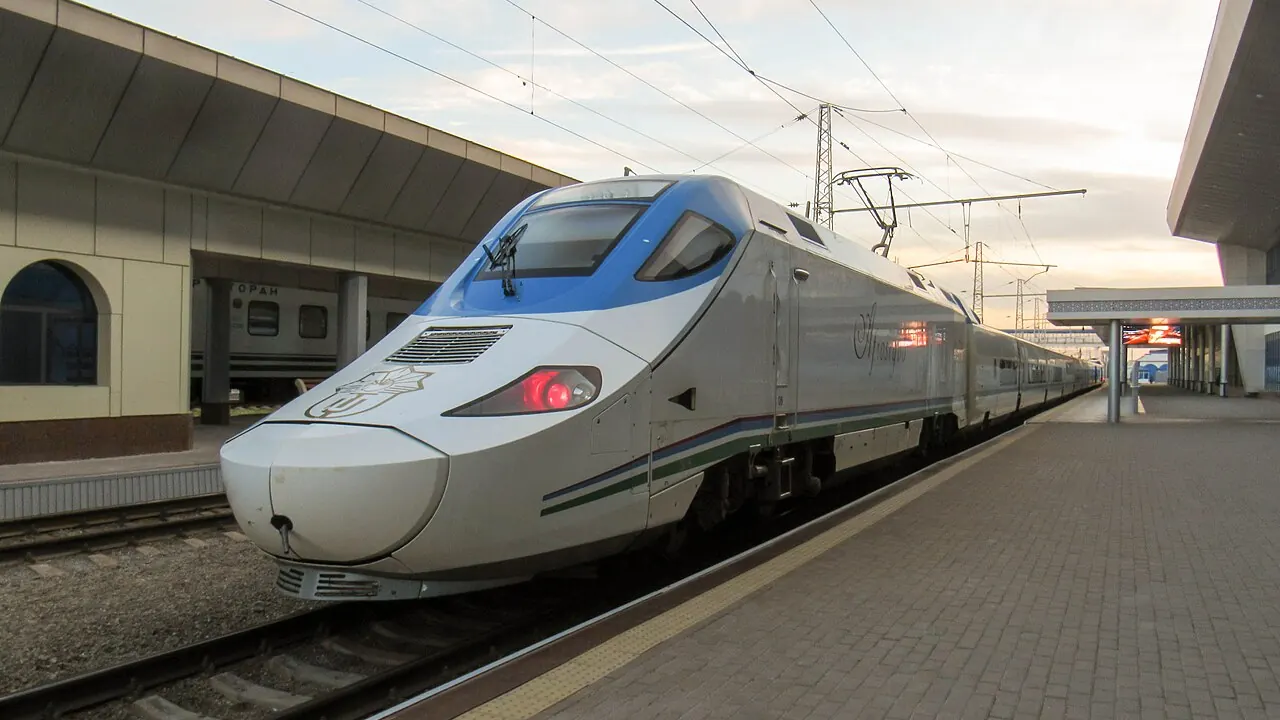
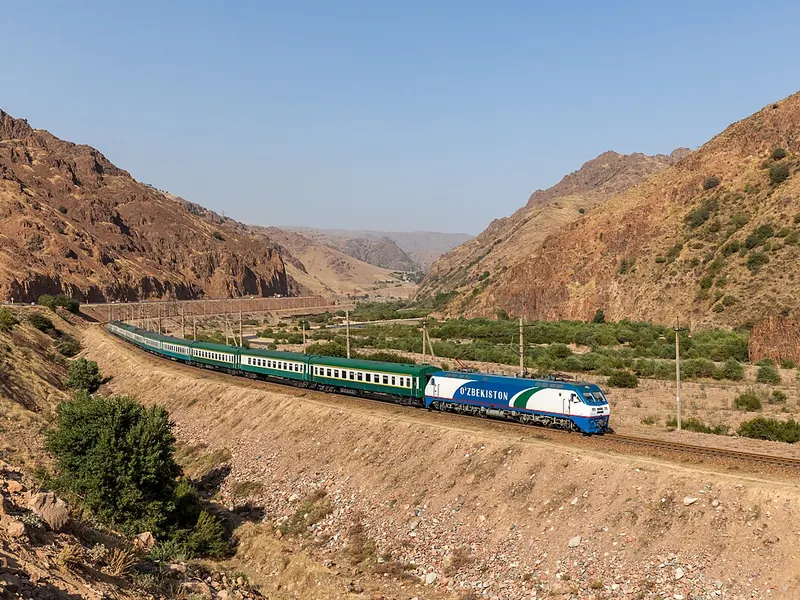
Afrosiyob high-speed train at a station in Uzbekistan
MYticket · UZBEKISTAN

Uzbekistan by Train

Uzbekistan is one of the easiest Central Asian countries to travel by rail because the main tourist corridor — Tashkent, Samarkand, Bukhara and Khiva — is connected by several different train products.

The difficult part is usually not understanding the geography. It is knowing which train to book, when tickets will appear, which station you need and what to do when Afrosiyob is unavailable.

High-speed Afrosiyob is usually the first train to check between Tashkent, Samarkand and Bukhara. Jaloliddin Manguberdi now gives Khiva a much faster rail connection. Sharq remains an important fallback, while conventional sleeper trains remain useful when travelling overnight.

Search Uzbekistan trains
At a glance

Uzbekistan train quick facts

QuestionAnswer
Main high-speed trainAfrosiyob
Fast train to KhivaJaloliddin Manguberdi
Useful slower intercity trainSharq
Main tourist rail corridorTashkent → Samarkand → Bukhara → Khiva
Normal luggage allowance36 kg
Main sleeper classesPlatskart, Kupe, SV
Tashkent stationsCentral and South
Bukhara stationIn Kogon, outside historic center
Khiva railway stationYes, Khiva has its own station
Foreign cardsOfficial system supports international cards, but failures are still reported
Ticket releaseOften around a two-month horizon, but not perfectly predictable

Train schedules, fares and release patterns change. Check the live search for your travel date.

Most useful Uzbekistan train routes

RouteTrain to check firstTypical fast journeyBackup
Tashkent → SamarkandAfrosiyob~2h10–2h30Sharq / conventional
Samarkand → BukharaAfrosiyob~1h40–1h50Sharq
Tashkent → BukharaAfrosiyob~4h10–4h20Sharq / sleeper
Bukhara → KhivaJaloliddin when availablevaries by serviceconventional train / road
Tashkent → KhivaJaloliddin~7½hovernight sleeper
Khiva → Bukharaconventional / fast service if available~6–7h on conventional examplesroad
Tashkent → Andijanintercity train~6–7hflight / road

Afrosiyob is the first train to check on the Tashkent–Samarkand–Bukhara corridor. For Khiva, check Jaloliddin Manguberdi first, but keep conventional trains and Urgench in mind when availability is poor.

Choose the right product

Which Uzbekistan train should you take?

Afrosiyob, Jaloliddin Manguberdi, Sharq and conventional sleepers are different products. Check the train type before comparing only the departure time or price.

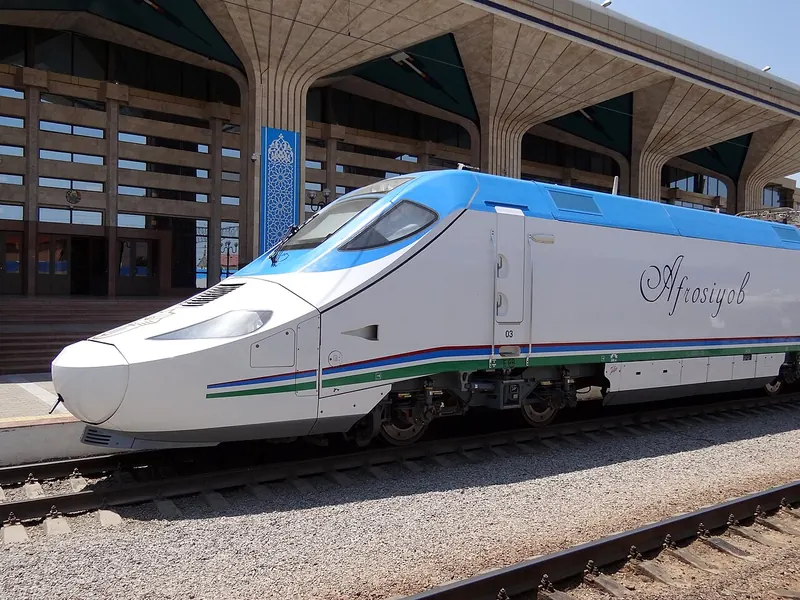
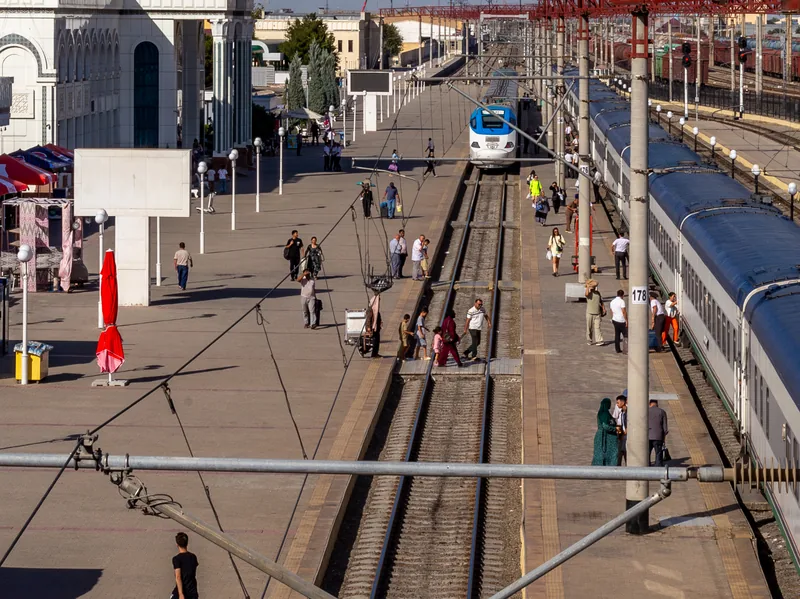
Afrosiyob high-speed train at Samarkand station
Train product

Afrosiyob

Afrosiyob is the first train to check between Tashkent, Samarkand and Bukhara. It is the fastest and simplest option for the classic tourist corridor, but popular departures can sell out quickly.

Network roleHigh-speed intercity
Check first forTashkent, Samarkand, Bukhara
Planning noteUse live inventory, not a fixed assumption

For a deeper Uzbekistan railway guide, compare the wider rail network after checking your live result.

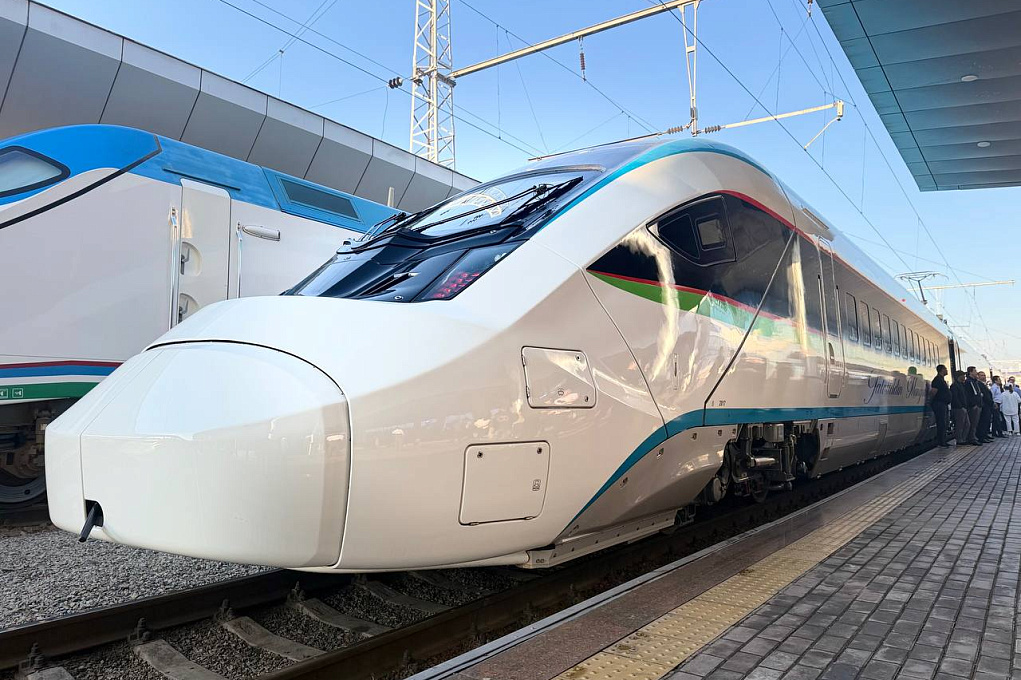
Jaloliddin Manguberdi high-speed train at a station in Uzbekistan
Train product

Jaloliddin Manguberdi

Jaloliddin Manguberdi is the newer fast western service linking Tashkent with Samarkand, Navoi, Bukhara, Urgench and Khiva. Its release pattern can be less predictable than Afrosiyob.

Network roleFast western service
Check first forKhiva and Urgench
Planning noteCheck nearby dates if inventory is missing
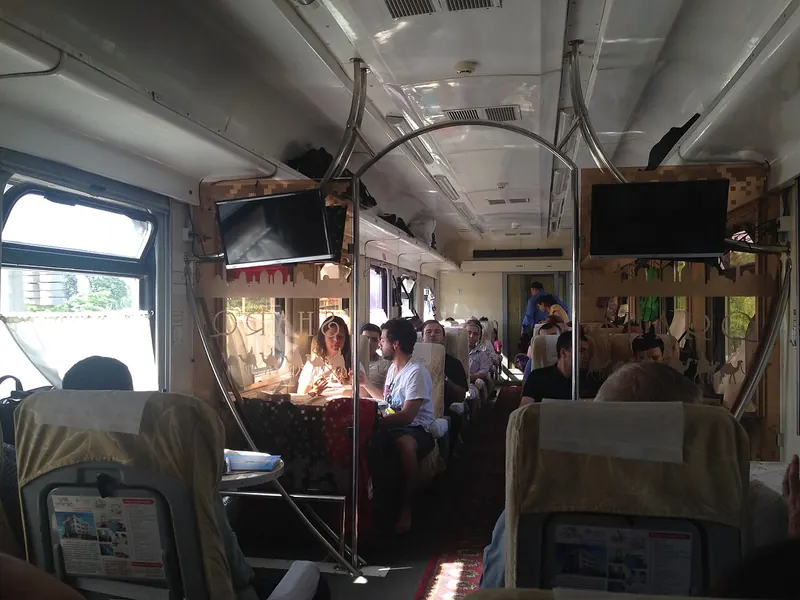
Seated interior of a Sharq train in Uzbekistan
Train product

Sharq

Sharq is the reserved-seat alternative to check when Afrosiyob is full or its departure does not fit. On Samarkand–Bukhara, it can keep the planned city transfer intact.

Network roleIntercity fallback
AccommodationReserved seat
Planning noteCompare the full day, not only duration
Conventional Uzbekistan Railways passenger train in a mountain valley
Train product

Conventional and sleeper trains

Conventional sleeper trains still remain useful for overnight western journeys. They trade speed for a berth, a night on the move and a wider network than the fast trains.

Network roleLong-distance and overnight
ClassesPlatskart, Kupe, SV
Planning noteCheck the exact train and car type

Afrosiyob, Sharq or sleeper?

TrainBest forMain advantageMain trade-off
AfrosiyobTashkent–Samarkand–BukharaFastestSells out quickly
Jaloliddin ManguberdiKhiva / UrgenchMuch faster western connectionRelease can be inconsistent
SharqAfrosiyob fallbackReliable reserved-seat alternativeSlower
Sleeper trainOvernight western journeysSaves daytime + hotel nightMuch slower
NasafSelected southern/intercity routesUseful network coverageLess relevant to classic tourist route

Uzbekistan Railways' published passenger schedule currently lists Sharq train 710F from Tashkent Central to Bukhara at 08:37 → 14:18, and train 712F at 20:32 → 02:29.

Sharq has its own useful timetable, so check it before abandoning the route when Afrosiyob is full.

Keep these official full-route times separate from date-specific booking examples.

Route planner

Find your route

Start with the city pair, then compare the fast train, reserved-seat fallback and sleeper option where they exist. These are the route notes covered below.

Classic corridor

Tashkent to Samarkand by train

Take Afrosiyob if the departure time and inventory work for you. This is the fastest corridor and commonly takes around 2¼ hours, but availability is often the bigger problem. If it is sold out, check Sharq or a conventional service before switching to the road.

Tashkent to Samarkand train schedule

There is usually more than one useful Afrosiyob departure, so this route is not simply a choice between “morning train” and “no train.” Current booking inventory shows Afrosiyob departures spread from early morning into the evening, alongside slower conventional services.

TrainDepartureArrivalJourney
Afrosiyob06:0308:212h18
Afrosiyob06:3008:482h18
Afrosiyob07:2109:392h18
Afrosiyob07:5210:222h30
Afrosiyob08:2910:532h24
Afrosiyob11:1513:332h18
Afrosiyob13:5616:142h18
Afrosiyob19:4122:052h24
Sharq20:1323:453h32

Timetables change. Check the live search for your travel date.

Current booking inventory supports these representative departures.

Tashkent to Samarkand train price

Afrosiyob costs more than the slower trains, but on this route you are buying time rather than necessity. Current online inventory shows Afrosiyob standard/economy booking examples around the low-$20 range, while slower seated or sleeper products can be noticeably cheaper. Do not choose the cheapest ticket before checking the train type. A cheap overnight or conventional ticket and a daytime Afrosiyob seat are not equivalent products.

ProductCurrent online example
Conventional / sleeperfrom roughly $12–15
Sharq / seated conventionalaround $15
Afrosiyob standard seataround $23

Booking-platform prices can include fees and should not be treated as the operator's permanent tariff.

Can Samarkand be a day trip?Yes, if a suitable early Afrosiyob out and evening return are available. The right tickets are the constraint. Stay overnight when the times create a rushed day.

Which train times work for a Samarkand day trip?

An early Afrosiyob outbound is what makes the day trip work.

A departure around 06:00–08:00 can put you in Samarkand during the morning. A late-morning departure technically still gets you there quickly, but it gives away much more of the sightseeing day.

Do not book the outbound first and assume a useful return will still be available. Check both directions before paying.

For a first visit I would usually choose an early Afrosiyob if I wanted the maximum day in Samarkand.

If you are moving hotels rather than making a day trip, a later train can be better because arriving at 08:30 is not automatically useful when your room is not ready.

Afrosiyob train at Samarkand railway stationCheck Tashkent–Samarkand tickets
Short high-speed leg

Samarkand to Bukhara by train

Afrosiyob takes about 1¾ hours and Sharq about 2½ hours on typical schedules. If Afrosiyob is unavailable, take Sharq rather than disrupting the itinerary around a small difference in travel time.

Samarkand to Bukhara train schedule

This route has one of the best combinations of Afrosiyob and Sharq options in the country. Current inventory shows high-speed trains taking roughly 1h43–1h49, while Sharq examples take roughly 2h15–2h30.

TrainDepartureArrivalJourney
Afrosiyob08:3110:141h43
Afrosiyob09:4911:381h49
Afrosiyob10:3212:211h49
Afrosiyob10:5912:421h43
Sharq11:5514:102h15
Sharq12:1514:382h23
Sharq12:3315:012h28
Afrosiyob22:1523:581h43

Timetables change. Check the live search for your travel date.

Current booking inventory supports these representative departures.

Samarkand to Bukhara train price

Current online booking examples show: conventional sleeper seats/berths from roughly $11; Sharq seated travel around $13; Afrosiyob standard seating around $16–17.

ProductCurrent online example
Conventional sleeper~US$11
Sharq~US$13
Afrosiyob~US$16–17

On this route the Afrosiyob premium over Sharq can be relatively small, so departure time and seat availability may matter more than price.

Booking-platform prices can include fees and should not be treated as the operator's permanent tariff.

I would not reorganize an entire itinerary just to save 40 minutes.

If Afrosiyob at 10:59 works, take it. If only Sharq at 12:15 works, I would take Sharq rather than lose hours waiting for a high-speed train.

Check Samarkand–Bukhara tickets
Main tourist corridor

Tashkent to Bukhara by train

Check Afrosiyob first and Sharq as the fallback. Bukhara railway station is outside the historic center in Kogon, so include the road transfer when you compare arrival times.

Current official schedule pages show that Afrosiyob departure patterns can change. Treat the live result as the useful answer for your date.

Tashkent to Bukhara train schedule

Afrosiyob turns Tashkent–Bukhara into a roughly four-hour journey. Sharq and conventional trains are substantially slower but useful when the high-speed trains are full. Current online inventory shows this broad service pattern.

TrainDepartureArrivalJourney
Afrosiyob06:0310:144h11
Afrosiyob07:2111:384h17
Afrosiyob08:0612:214h15
Afrosiyob08:2912:464h17
Afrosiyob19:4123:584h17
Sharq20:1302:336h20
Conventional sleeper23:5507:22~7h27

Timetables change. Check the live search for your travel date.

Current booking inventory supports these representative departures.

Tashkent to Bukhara train price

Current online booking examples show a substantial price difference between train products: conventional sleeper from roughly $15; Sharq around $21; Afrosiyob standard seat around $37–38.

ProductCurrent online example
Conventional sleeper~US$15
Sharq~US$21
Afrosiyob standard seat~US$37–38

Do not compare price alone. Afrosiyob can save around two hours against Sharq and several hours against some conventional services.

Booking-platform prices can include fees and should not be treated as the operator's permanent tariff.

For a normal daytime transfer I would choose Afrosiyob.

The overnight alternatives become interesting only if their timing solves the hotel/itinerary better.

Check Tashkent–Bukhara tickets

Bukhara to Tashkent train schedule

Do not assume the reverse timetable mirrors the outbound journey. Current examples:

TrainDepartureArrival
Afrosiyob03:1507:34
Sharq05:1512:18
Afrosiyob14:5819:17
Afrosiyob16:1120:30
Sharq16:4623:48
Afrosiyob17:5522:08

Timetables change. Check the live search for your travel date.

Current booking inventory supports these representative departures.

Western connection

Bukhara to Khiva by train

Check Jaloliddin Manguberdi first. If it is not available, search Khiva, Urgench, a conventional sleeper or passenger service, and then road options. Do not interpret no fast train as no practical journey.

Bukhara to Khiva train schedule

Bukhara–Khiva is more complicated than Samarkand–Bukhara because train availability and product type vary more. Conventional train inventory currently includes morning departures from Bukhara 1/Kogon reaching Khiva around midday.

ClassDepartureArrivalJourney
3rd Class Sleeper07:0112:545h53
2nd Class Sleeper07:1212:475h35
3rd Class Sleeper07:1212:475h35
1st Class Sleeper07:1212:475h35

Timetables change. Check the live search for your travel date.

Current booking inventory supports these representative departures.

How much is Bukhara to Khiva by train?

Current online conventional-train examples include: 3rd Class sleeper from roughly $13; 2nd Class sleeper around $18; 1st Class sleeper around $30; Grand Deluxe examples around $54.

ProductCurrent online example
3rd Class sleeper~US$13
2nd Class sleeper~US$18
1st Class sleeper~US$30
Grand Deluxe~US$54

This is a useful example of why “First Class” needs context. On a conventional train it may mean a sleeping compartment product, not an Afrosiyob-style premium seat.

Booking-platform prices can include fees and should not be treated as the operator's permanent tariff.

Check Jaloliddin Manguberdi first when it is available, but do not ignore these conventional trains.

A five-to-six-hour direct train may be much better than changing the itinerary just because the newest train is unavailable.

What is the Jaloliddin Manguberdi train?

It is a newer fast train on the Tashkent–Khiva route, stopping at major cities including Tashkent, Samarkand, Navoi, Bukhara, Urgench and Khiva. The full Tashkent–Khiva journey is about 7½ hours when the service operates for your date.

Fast train or sleeper?

Take the fast service for speed, daytime travel and a useful fixed departure. Choose a sleeper for an overnight journey, a berth, a saved hotel night or when the fast train is unavailable.

Check Bukhara–Khiva tickets
Full western journey

Tashkent to Khiva by train

Jaloliddin Manguberdi takes about 7½ hours on the fast service, compared with roughly 13–14 hours for a conventional sleeper. Use Jaloliddin for a daytime arrival; use the sleeper when an overnight berth saves a hotel night or the fast train is unavailable.

Tashkent to Khiva night train schedule

Conventional overnight trains remain useful alongside Jaloliddin Manguberdi. Current online inventory includes departures around 21:24–22:48, generally reaching Khiva around late morning or midday the following day.

DepartureArrivalApprox. journey
21:2411:1013h46
21:4011:2013h40
22:4812:4713h59

Timetables change. Check the live search for your travel date.

Current booking inventory supports these representative departures.

How much is the Tashkent to Khiva sleeper?

Current online booking examples include: 3rd Class sleeper around $21; 2nd Class sleeper around $29; 1st Class / SV around $54; Grand Deluxe examples around $100–111.

ProductCurrent online example
3rd Class sleeper~US$21
2nd Class sleeper~US$29
1st Class / SV~US$54
Grand Deluxe~US$100+

For two travelers, compare the total sleeper price against both Jaloliddin and one hotel night. Compare the overnight berth with the time and accommodation it replaces.

Booking-platform prices can include fees and should not be treated as the operator's permanent tariff.

These are sleeper trains, not just slow daytime trains.

The comparison with Jaloliddin is therefore: ~7½ hours seated fast train vs ~14 hours using the night for travel.

Conventional Uzbekistan passenger train used for long-distance route context
Reverse direction

Khiva to Bukhara by train

Search the fast western service in the reverse direction first, then check sleeper and conventional options. If the result arrives in Urgench rather than Khiva, compare the road connection before confirming the booking.

Khiva to Bukhara train schedule

The reverse direction is usually an afternoon/evening journey on current conventional inventory.

ClassDepartureArrivalJourney
3rd Class sleeper15:1521:226h07
2nd Class sleeper16:2522:426h17
1st Class sleeper16:2522:546h29

Timetables change. Check the live search for your travel date.

Current booking inventory supports these representative departures.

A mid-afternoon departure can work well because it gives you the morning in Khiva before travelling to Bukhara.

Current booking inventory supports the approximate afternoon pattern.

Reverse-direction search

Samarkand to Tashkent, Bukhara to Samarkand and Khiva to Tashkent

Samarkand to Tashkent train

Afrosiyob is still the first train to check. Reverse services do not simply mirror the Samarkand–Bukhara timetable, so check the actual date before building the hotel transfer around it.

Bukhara to Samarkand train

Check Afrosiyob first, then Sharq or conventional services. Reverse-direction departures can have a different timetable from the outbound leg, so use the live search for the date and station.

Khiva to Tashkent train

Use the fast service for a daytime journey. Use a conventional sleeper when you want to travel overnight.

Tickets and inventory

How Uzbekistan train tickets work

Does “no seats” mean the train is sold out?

Not always. It can mean the train is sold out, the inventory has not been released, the service or date is not open, or availability has temporarily changed. Check nearby dates and a second train before rebuilding the itinerary.

When do tickets go on sale?

There is no guaranteed single pattern. Afrosiyob often appears around a two-month horizon, while Jaloliddin Manguberdi can be less predictable. Check early, check nearby dates and keep a fallback.

Sold-out decision tree

1Another departureKeep the city pair and change the time.
2Nearby or reverse flexibilityTry adjacent dates or reorder the corridor.
3SharqA reserved-seat alternative on the core corridor.
4Conventional trainConsider an overnight berth for western journeys.
5MYticket search, then roadCompare the complete journey before abandoning the route.

Uzbekistan train price examples

RouteCheapest current online train exampleFaster/premium example
Tashkent → Samarkand~US$12–15Afrosiyob ~US$23
Samarkand → Bukhara~US$11–13Afrosiyob ~US$16–17
Tashkent → Bukhara~US$15–21Afrosiyob ~US$37–38
Bukhara → Khiva~US$132nd Class sleeper ~US$18
Tashkent → Khiva sleeper~US$21SV ~US$54

These are current online booking examples, not fixed Uzbekistan Railways tariffs. Booking-channel fees and availability can change the final price.

Why is the train price different on different websites?

Because you may not be comparing the same product or the same sales channel.

A price difference can come from:

  • Afrosiyob vs Sharq;
  • Economy vs Business/VIP;
  • Platskart vs Kupe vs SV;
  • booking-platform fees;
  • currency conversion;
  • remaining inventory.

Compare the train, class, departure and final checkout price, not only the first number you see.

Should you book the cheapest Uzbekistan train?

Not before checking the timetable.

On Tashkent–Samarkand, saving roughly $10 can turn a little-over-two-hour Afrosiyob trip into a journey taking more than three or four hours.

On a long overnight route, the opposite can be true: a cheap sleeper may save a hotel night.

Price is useful only when compared with the actual train product.

Payment and passenger details

Booking with a foreign card

The official e-ticket system supports international cards, but real payment failures are still reported. If payment fails, confirm the seat result, retry in the browser or app, use another card or try another legitimate channel. Do not assume a failed payment means the train is sold out.

Do not confuse “payment failed” with “train unavailable.”Keep the route, date and train number visible while you troubleshoot.

Passport and identity details

Enter each passenger’s passport or identity-document details exactly as they appear on the document used for boarding. Incorrect identity data can make an electronic ticket invalid.

Seats and berths

Classes on Uzbekistan trains

Afrosiyob classes

Economy is the price-led option. Business adds a more comfortable setting. VIP is the most spacious premium choice. Confirm the exact class shown for the departure.

Afrosiyob train at a station in Uzbekistan

Sleeper classes

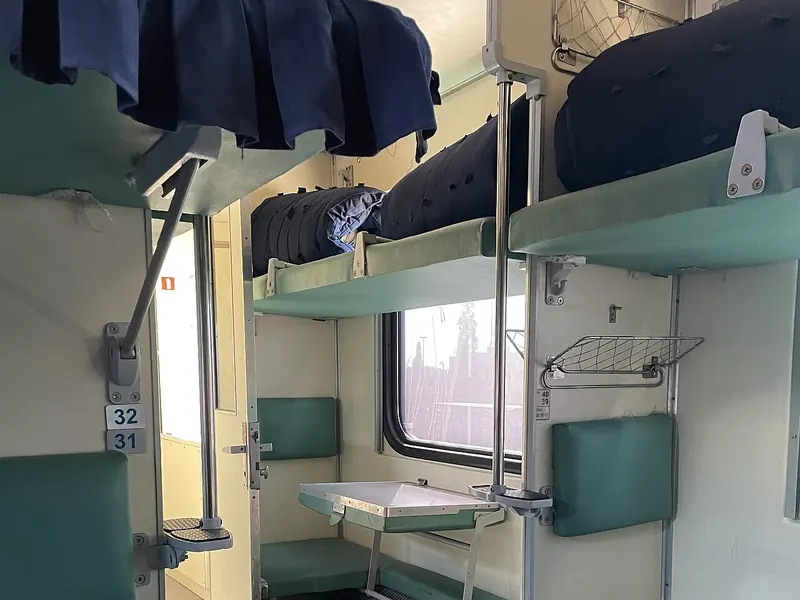
Platskart is open-plan. Kupe is a closed four-berth compartment. SV is a two-berth compartment. Do not confuse seat classes with sleeper accommodation.

Four-berth sleeper compartment on an Uzbekistan train

Upper or lower berth?

Lower berths are easier for access and luggage. Upper berths can offer more privacy and a higher sleeping position. Choose around mobility, luggage and sleep preferences.

Air conditioning and older stock

Do not assume every conventional sleeper works like Afrosiyob. Cooling can vary by train and carriage, especially on older stock; this is not a universal defect.

Overnight planning

Sleeper trains, Sharq and Nasaf

Conventional sleepers are useful when the western journey is long, a hotel night can be saved or fast inventory is unavailable. Sharq is a reserved-seat fallback. Nasaf serves selected southern and intercity routes and is less relevant to the classic tourist corridor.

Closed four-berth sleeper compartment on a Khiva–Bukhara service

Fergana Valley

Kokand, Margilan, Namangan and Andijan are connected through the wider intercity network. For Tashkent–Andijan, Tashkent–Namangan and Tashkent–Kokand, check the exact conventional service and departure station rather than assuming the fast tourist pattern applies.

Western Uzbekistan

Khiva, Urgench and Nukus require longer-distance planning. Nukus is a useful gateway for Karakalpakstan; Khiva and Urgench are separate arrival choices with different road transfers.

Where road is the better comparison

Samarkand → Shahrisabz: compare road first.

Bukhara → Nurata: road is the practical connection.

Tashkent → Chimgan / Charvak: plan a road journey rather than a direct train.

Stations and arrival reality

Which Uzbekistan station do you need?

Afrosiyob usually uses Tashkent Central, while some long-distance sleeper trains use Tashkent South. Bukhara’s station is in Kogon, and Khiva and Urgench are separate arrival points. Read the station name on the ticket before leaving the hotel.

For the wider network around station names and services, see Uzbekistan train information before you make an onward plan.

Which station does your train use?

Route/productStation detail to check
Afrosiyob from Tashkentusually Tashkent Central — verify ticket
Sharq from TashkentTashkent Central on current published schedule
Tashkent → Khiva sleepermany services use Tashkent South
Arrival in BukharaBukhara 1 / Kogon, outside old city
Khiva-bound traincheck whether ticket says Khiva or Urgench

Train time is useless if you go to the wrong station.

Uzbekistan Railways' current published schedule clearly distinguishes Tashkent Central services from long-distance departures at Tashkent South.

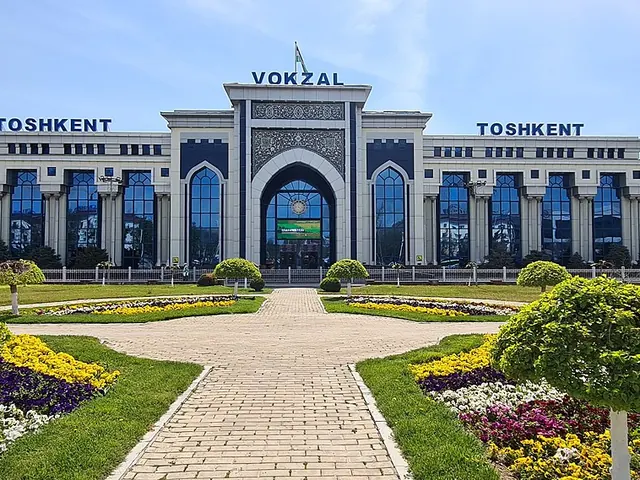
Tashkent Central railway station exterior
Tashkent

Tashkent Central

The north or Central station is the main departure point to check for many Afrosiyob and intercity services. Still read the station name on the ticket because long-distance trains can use Tashkent South.

Open in Google Maps
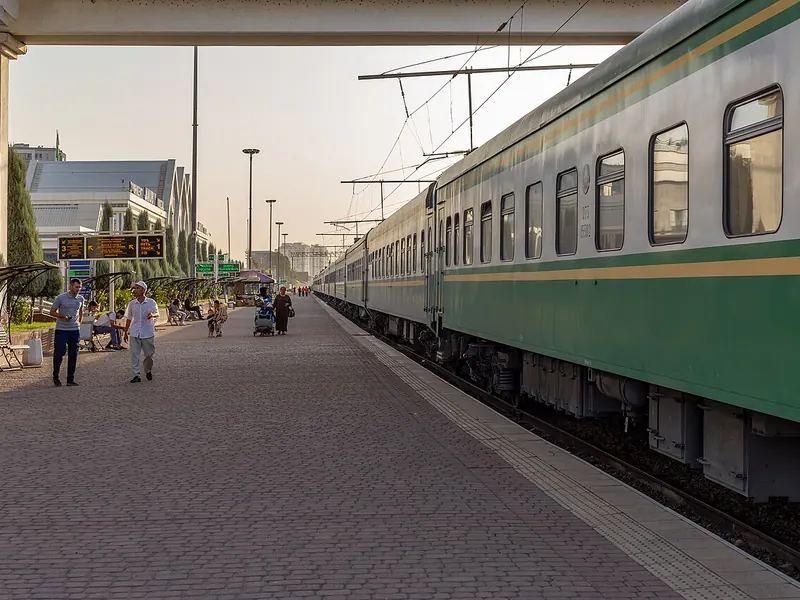
Platform at Tashkent South railway station
Tashkent

Tashkent South

South station is also known as Yuzhny or Janubiy. Some long-distance and sleeper departures use it, so do not go to Central by habit without checking the exact ticket.

Open in Google Maps
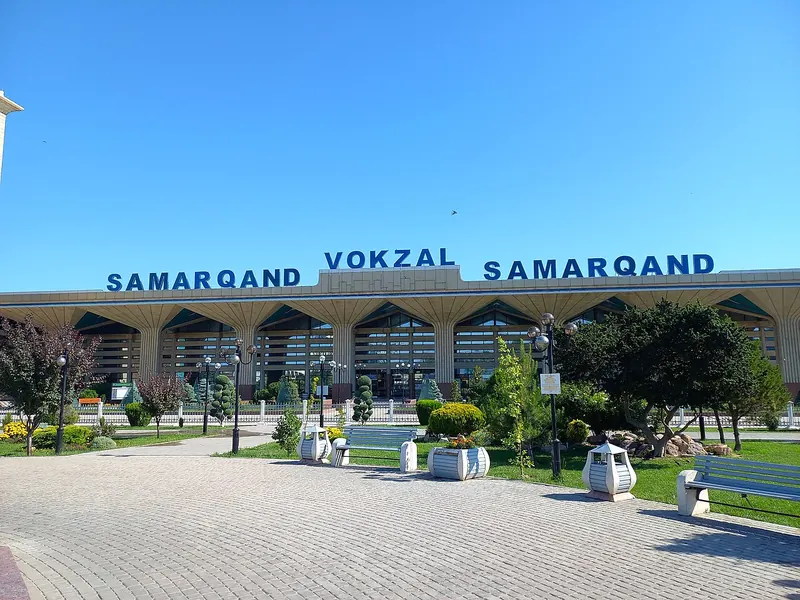
Samarkand railway station exterior
Samarkand

Samarkand

Samarkand is the main rail stop between Tashkent and Bukhara. Afrosiyob and other intercity trains arrive here; continue by road to the historic center.

Open in Google Maps
Afrosiyob train arriving at Bukhara Kogon station
Bukhara

Bukhara 1 / Kogon

Bukhara railway station is in Kogon, outside the historic center. Allow for the road transfer when choosing a train; an 18:00 arrival does not mean you are at your guesthouse at 18:05.

Open in Google Maps
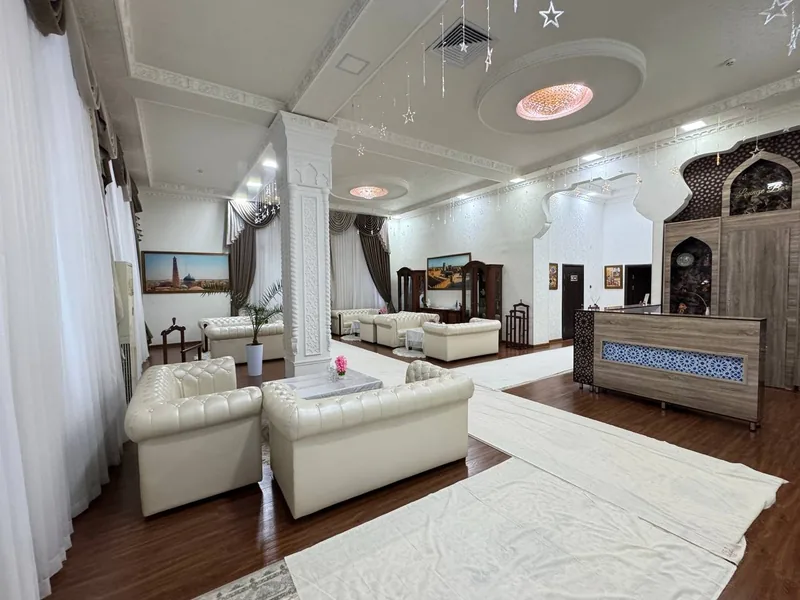
Khiva railway station lounge
Khiva

Khiva

Khiva has its own railway station, which makes the western end of the tourist corridor easier to plan than it once was. Check whether your result arrives at Khiva or Urgench before booking your onward stay.

Open in Google Maps
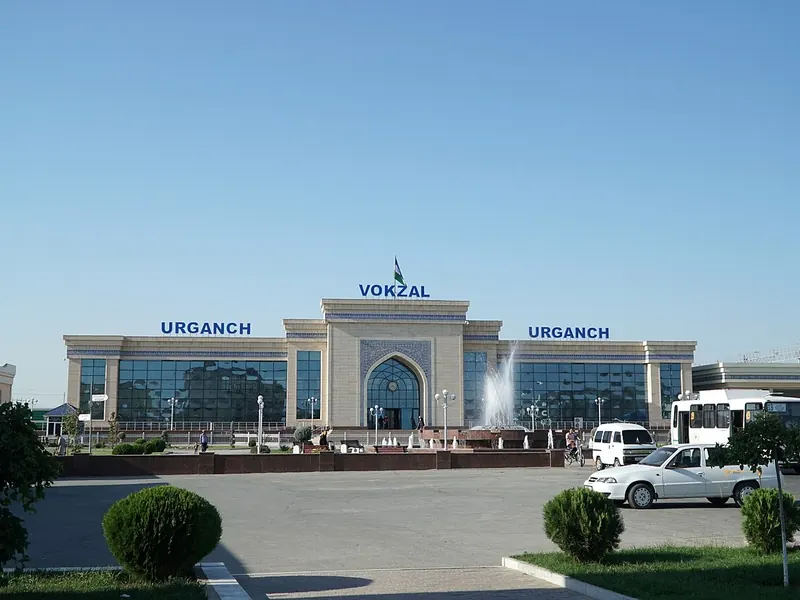
Urgench railway station exterior
Urgench

Urgench

Urgench is the main transport gateway for the Khorezm region. It can be a practical result when Khiva inventory is unavailable, but it adds a road transfer to the old city.

Open in Google Maps
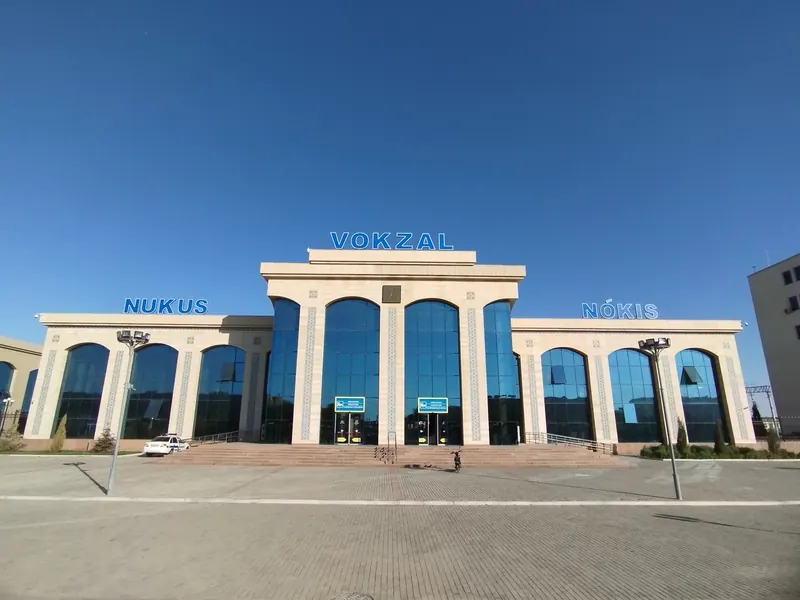
Nukus railway station exterior
Karakalpakstan

Nukus

Nukus is a useful western rail gateway for Karakalpakstan and the Savitsky Museum. It is generally a conventional long-distance destination rather than a short Afrosiyob hop.

Open in Google Maps
Tashkent stations

Tashkent Central vs Tashkent South

Many fast and intercity trains use Tashkent Central. Some long-distance sleeper services use Tashkent South. South is also referred to as Yuzhny or Janubiy. Show the exact ticket to your driver and check the station before leaving your accommodation.

Allow roughly 30–45 minutes at the station for security, platform finding and luggage. That is practical advice for visitors, not an official universal minimum.

Hotel departure planning

Train departure time is not hotel departure time

Add three things before deciding when to leave: road time to the station; station security; time to locate the platform.

This matters most in Tashkent because Central and South are different stations, and in Bukhara because the main station is in Kogon.

Do not plan a 07:30 train as if 07:30 is when you leave the hotel.

Bukhara arrival

Bukhara station is in Kogon

Kogon is outside Bukhara’s historic center. A train arriving at 18:00 still needs a road transfer, luggage collection and the local traffic plan. It does not mean you arrive at your guesthouse at 18:05.

Khorezm arrival

Khiva or Urgench?

Khiva has its own railway station and is the more direct arrival for the old city. Urgench is a useful regional gateway, but reaching Khiva requires a road transfer. Compare the train arrival, transfer time and accommodation address together.

Rules and refunds

Luggage, refunds and travel details

36 kg luggage allowance

Uzbekistan Railways currently allows 36 kg of free hand luggage per passenger on a full or child ticket.

The normal maximum combined dimensions are 180 cm.

In double-compartment cars, the published allowance can reach 50 kg.

Normal tourist suitcases are usually well within the weight allowance. Very bulky equipment is a different question.

Refund timing

Unused electronic tickets can generally be returned online or at a station ticket office, subject to the operator’s timing rules and deductions.

Return timingDeduction / outcome
More than 24h15,000 UZS refund fee
6–24h15,000 UZS + 50% reserved-seat component
<6h and up to 1h after15,000 UZS + 100% reserved-seat component
Later than 1h afterNormally no refund
Check the exact refund rule before confirming a cancellation.Online and station procedures can differ by ticket type and payment route.

The current e-ticket policy also lists a UZS 40,000 service fee for some online refunds; check the payment route before cancelling.

Family tickets

Uzbekistan train tickets for children

Children's fares depend on age.

Under the current Uzbekistan Railways passenger rules:

  • one child under 5 can travel free with an adult without a separate seat;
  • children aged 5–10 receive a 50% fare discount with a seat;
  • children aged 10 and older require an adult ticket.

If you want a separate seat for a child who would otherwise travel free, book the appropriate child ticket rather than assuming the free fare includes a seat.

Travelling by train in Uzbekistan with children

Afrosiyob is usually easiest for families on Tashkent–Samarkand and Samarkand–Bukhara because the journey is short.

On an overnight sleeper, Kupe can be easier for a family because four berths share one compartment.

If children are young enough for discounted/free travel, check whether a separate berth or seat is included before booking.

Can you take a bicycle on Uzbekistan trains?

Uzbekistan Railways' published rules specifically mention bicycle carriage on suburban trains, including one bicycle in the vestibule under the applicable conditions. Do not assume the same arrangement applies automatically to Afrosiyob or long-distance trains. Check with the operator for your exact service.

A practical booking sequence

Four Uzbekistan train walkthroughs

01

Tashkent → Samarkand

Search Afrosiyob first. Confirm Tashkent Central, departure time and passenger details, then keep Sharq as the fallback if the fast train is full.

02

Samarkand → Bukhara

Search both Afrosiyob and Sharq. If the fast departure is unavailable, Sharq is often a more useful change than breaking the route into a road journey.

03

Tashkent → Khiva sleeper

Check Tashkent South when the result is a conventional night train. Choose Platskart, Kupe or SV according to privacy and budget, then plan the arrival transfer in Khiva.

04

Bukhara → Khiva when fast service is unavailable

Search Khiva and Urgench, then check a sleeper or passenger train. If the arrival time is poor, compare a road transfer; no fast result does not mean no practical journey.

Main route matrix

RouteFirst checkTypical planning timeKey note
Tashkent → SamarkandAfrosiyobAbout 2¼ hoursCheck Central station and early inventory
Samarkand → BukharaAfrosiyob or SharqAbout 1¾–2½ hoursSharq can preserve the itinerary
Tashkent → BukharaAfrosiyobAbout 4 hoursBukhara station is in Kogon
Bukhara → KhivaJaloliddin or sleeperVaries by serviceCheck Khiva and Urgench results
Tashkent → KhivaJaloliddin or sleeperAbout 7½ hours fast / 13–14 hours sleeperCompare daytime and overnight
Khiva → BukharaFast service, sleeper or roadVaries by dateDo not treat one missing result as no route
Tashkent → Andijan / Namangan / KokandConventional intercity trainVaries by serviceCheck the Fergana Valley result
Tashkent → NukusConventional long-distance trainVaries by servicePlan for a long western journey
Fergana Valley

Tashkent to Andijan train

The Fergana Valley is not only a road destination.

Uzbekistan Railways' published schedule currently lists train 730F from Tashkent Central to Andijan at 08:10 → 14:14 daily. Other Namangan/Andijan services operate on selected days.

ServiceTashkentAndijanOperating pattern
730F08:1014:14Daily
732F17:5500:17Wed–Sat
734F via Namangan17:5501:00Tue & Sun

Timetables change. Check the live search for your travel date.

How much is Tashkent to Andijan?

Current online inventory shows: sleeper examples from roughly $13–18; regular 2nd Class seated service around $17; 1st Class seated examples around $49.

ProductCurrent online example
Sleeperfrom roughly $13–18
Regular 2nd Class seatedaround $17
1st Class seatedaround $49

On this route the jump from 2nd to 1st Class is large enough that I would compare the actual seat product before paying automatically.

Booking-platform prices can include fees and should not be treated as the operator's permanent tariff.

For a daytime journey I would start with the 08:10 service rather than automatically booking a long road transfer.

Transport planning

Which trains would I book for Tashkent–Samarkand–Bukhara–Khiva?

For a normal first trip, I would start with:

  • Tashkent → Samarkand: Afrosiyob
  • Samarkand → Bukhara: Afrosiyob, Sharq if sold out
  • Bukhara → Khiva: Jaloliddin Manguberdi if available; otherwise conventional train or road

I would not insist on using the fastest train for every leg.

The best itinerary is the one with good departure times, not the one with the most high-speed trains.

A practical 7-day Uzbekistan train itinerary

Day 1 — Tashkent
Arrive and keep the first day simple.

Day 2 — Tashkent → Samarkand
Take an early or mid-morning Afrosiyob.

Day 3 — Samarkand
Full day.

Day 4 — Samarkand → Bukhara
Take Afrosiyob or Sharq. This route is short enough that you do not need to obsess over the fastest train.

Day 5 — Bukhara
Full day.

Day 6 — Bukhara → Khiva
Check Jaloliddin first. If it does not fit, use a conventional train or road transfer.

Day 7 — Khiva
Full day.

If your itinerary is longer, add Tashkent/Fergana/Nukus rather than squeezing every major city into one week.

If you have 10 days

With three extra days, I would slow the classic route down rather than simply add more cities.

Another reasonable option is to extend toward:

  • the Fergana Valley;
  • Nukus / western Uzbekistan;
  • another night in Samarkand or Bukhara.

Train availability should shape the order before hotels become non-refundable.

Should you book Uzbekistan trains before hotels?

For fixed Afrosiyob or Khiva journeys, I would check the trains before locking every hotel into a non-refundable date.

This matters especially when:

  • Afrosiyob availability is limited;
  • Jaloliddin tickets have not opened;
  • you want a specific sleeper compartment.

Flexible accommodation makes a difficult rail booking much easier to solve.

Questions answered

Uzbekistan train FAQs

Is Afrosiyob the fastest train in Uzbekistan?

For the main Tashkent–Samarkand–Bukhara corridor, Afrosiyob is the high-speed train to check first.

What is the fastest train from Tashkent to Khiva?

Jaloliddin Manguberdi is the fast western service to check. The full Tashkent–Khiva journey is about 7½ hours when the service is operating for your date.

Does Uzbekistan have a train to Khiva?

Yes. Khiva has its own station, and fast Jaloliddin Manguberdi services now connect it with Tashkent on selected schedules.

Is Khiva or Urgench the station for Khiva?

Both can appear in journey planning. Khiva is the more direct arrival for the old city; Urgench is a practical gateway with a road transfer.

How long is Tashkent to Samarkand by Afrosiyob?

Often around 2¼ hours, but the live result is the authority for your date.

How long is Samarkand to Bukhara by train?

Afrosiyob is around 1¾ hours and Sharq around 2½ hours on typical schedules.

Can Samarkand be a day trip from Tashkent?

Yes, if a suitable early departure and evening return are available. The right tickets are the constraint; stay overnight when the times create a rushed day.

Is Bukhara station in the historic center?

No. The Bukhara railway station is in Kogon, so include a road transfer to the historic center.

What is the Jaloliddin Manguberdi train?

It is a newer fast electric train on the western Tashkent–Khiva corridor, stopping at major cities including Samarkand, Navoi, Bukhara and Urgench.

Should I take a fast train or a sleeper to Khiva?

Take the fast service when you need a daytime arrival and a suitable seat. Take a sleeper when an overnight berth or saving a hotel night is the priority.

What does “no seats” mean on Uzbekistan railway search?

It can mean sold out, not released yet, a service or date that is not open, or temporarily changed inventory. Check nearby dates and fallback trains before rebuilding the itinerary.

When do Uzbekistan train tickets go on sale?

There is no single guaranteed release pattern. Afrosiyob often appears around a two-month horizon, while Jaloliddin release can be less predictable.

What should I do if Afrosiyob is sold out?

Try another departure, nearby dates, reverse flexibility, Sharq, a conventional train, the MYticket search, and then road options.

Is Sharq a good alternative to Afrosiyob?

Sharq is slower but provides a reserved-seat fallback. On a short corridor it can be more useful than changing the whole itinerary.

What classes are on Afrosiyob?

Afrosiyob usually offers Economy, Business and VIP. Economy prioritizes price, Business adds comfort, and VIP offers the most spacious premium setting. Confirm the exact inventory shown for your departure.

What are Platskart, Kupe and SV?

Platskart is open-plan sleeper accommodation, Kupe is a closed four-berth compartment, and SV is a two-berth compartment. They are sleeper accommodations rather than Afrosiyob seat classes.

Is an upper or lower berth better?

Lower berths are easier for access and luggage; upper berths offer more privacy and a higher sleeping position. Choose around your mobility, luggage and sleep preferences.

Do Uzbekistan sleeper trains have air conditioning?

Do not assume every conventional sleeper works like Afrosiyob. Cooling can vary by train and car, especially on older stock.

Which Tashkent station should I use?

Many fast and intercity services use Tashkent Central, while some long-distance sleeper services use Tashkent South. Read the exact ticket.

How early should I arrive at an Uzbekistan station?

Allow roughly 30–45 minutes for a foreign-visitor departure, security, platform finding and luggage. This is practical planning advice, not a universal official rule.

How much luggage can I take on an Uzbekistan train?

The normal allowance is 36 kg, subject to the operator’s size and carriage rules. A large suitcase is usually manageable within those limits.

Can I pay for Uzbekistan train tickets with a foreign card?

The official e-ticket system lists international cards, but real payment failures are still reported. A failed payment does not automatically mean the train is unavailable.

What should I do if payment fails?

Confirm the seat result, retry in the browser or app, try another card or use another legitimate booking channel. Do not immediately interpret payment failure as a sell-out.

Do I need my passport for a train ticket?

Enter the identity-document details exactly as they appear on the document you will use. Incorrect passenger data can make an electronic ticket invalid for boarding.

Can I refund an Uzbekistan train ticket?

Unused electronic tickets can generally be returned online or at a station ticket office, subject to the operator’s timing rules and deductions.

What is deducted when a ticket is refunded?

A 15,000 UZS refund processing fee is deducted, with additional reserved-seat deductions depending on how close the refund is to departure.

Can I change the date of an Uzbekistan train ticket?

Re-issue or date changes are not generally performed for purchased electronic travel documents, so check the live policy before relying on a change.

Is the Sharq train reserved seating?

Yes. Sharq is a reserved-seat intercity alternative, unlike the berth-based Platskart, Kupe and SV sleeper classes.

What is the Nasaf train?

Nasaf is a conventional intercity service associated with selected southern and network routes. It is less central to the classic Tashkent–Samarkand–Bukhara–Khiva itinerary.

Is Tashkent to Andijan possible by train?

Yes. Check conventional intercity results for Andijan and compare the exact service and station.

Can I travel from Tashkent to Namangan by train?

Yes, train results can appear for Namangan and the wider Fergana Valley. Check the current route and departure station.

Can I go from Tashkent to Kokand by train?

Yes. Kokand is part of the Fergana Valley rail network, but the service and timing should be verified for your date.

Is there a train from Tashkent to Nukus?

Yes. Conventional long-distance services can connect Tashkent and Nukus; plan it as a longer western journey.

Is train or road better from Samarkand to Shahrisabz?

Road is usually the practical comparison because Shahrisabz is not on the classic high-speed tourist corridor.

How do I get from Bukhara station to the old city?

Continue by road from Kogon. Allow for traffic, luggage and the actual address of your accommodation.

How do I get from Urgench station to Khiva?

Continue by road. Urgench is a transport gateway, while Khiva is the destination with the historic walled city.

Does a train ticket include hotel transfers?

No. A train ticket covers the rail journey; station-to-hotel road transfers need separate planning.

Can I use the train for Chimgan or Charvak?

Not as a simple direct tourist rail journey. Compare road transport from Tashkent for Chimgan and Charvak.

Can you take a bicycle on Uzbekistan trains?

Uzbekistan Railways' published rules specifically mention bicycle carriage on suburban trains, including one bicycle in the vestibule under the applicable conditions. Do not assume the same arrangement applies automatically to Afrosiyob or long-distance trains. Check with the operator for your exact service.

Are there sleeper trains from Khiva to Bukhara?

Conventional passenger and sleeper options can serve the western corridor, but the exact result depends on date and inventory.

What if no train is shown for Bukhara to Khiva?

Check nearby dates, Khiva and Urgench, sleeper or conventional options, and a road transfer. One missing fast result is not proof that the journey is impossible.

Is Uzbekistan easy to travel by train?

Yes, the main tourist corridor is straightforward once you match the train product to the route, station, release pattern and arrival transfer.